One router connects everyone: €4.90 a day.
Up to 10 phones and tablets on one connection, so nobody needs their own SIM. Delivered free in Marrakech and collected at the end.
Book my pocket Wi-Fi See pricingIn this article
Ancient Origins: At the Roots of the Amazigh Civilisation
The history of the Berbers in Morocco is lost in the mists of prehistory. Archaeological and genetic research suggests an indigenous presence dating back to the Palaeolithic era, more than 10,000 years ago.
Prehistory and Early Traces
Rock art :
Sites such as those in the High Atlas and the Moroccan Sahara (for example, the engravings of the Oued Drâa) reveal hunting and everyday scenes dating from the Neolithic period, attesting to an organised civilisation.
Capsian culture :
This Mesolithic/Neolithic culture, present in North Africa, is often associated with the proto-Berbers. It is characterised by stone tools and sophisticated funerary practices.
Theories on origins :
While the exact origin is debated, the majority of studies (such as those cited by the CNRS) point to an ancient indigenous settlement, with various influences over the millennia.
Antiquity: Carthaginians, Romans and Indigenous Kingdoms
From the first millennium BC, the Berbers came into contact with the great Mediterranean civilisations, while developing their own political entities.
Berber kingdoms :
The formation of kingdoms such as that of the Moors (present-day northern Morocco) or the Gaetulians. The Berber king Juba II, installed by Rome, ruled Mauretania from Volubilis, promoting a remarkable cultural syncretism.
Resistance and adaptation :
Figures of resistance such as Jugurtha in Numidia or Tacfarinas in Mauretania illustrate the fierce independence of the tribes. Nevertheless, Roman influence is visible in major archaeological sites such as Volubilis (listed as a UNESCO World Heritage Site).
Christianisation :
At the end of the Roman Empire, Christianity spread among certain Berber tribes, with figures such as Saint Augustine, born in Thagaste (present-day Algeria).
The Middle Ages: Islamisation, Dynasties and a Golden Age
The arrival of Islam in the 7th century marked a decisive turning point. The Berbers adopted it en masse, but often interpreted it through the prism of their own culture and social grievances, giving rise to movements and dynasties that dominated the Maghreb and Al-Andalus.
The Arab Conquest and Kharijite Revolts
The Umayyad conquest (early 8th century) integrated Morocco into the Muslim world. Revolts quickly broke out, driven by doctrines such as Kharijism, which rejected the legitimacy of the Umayyad caliphs and advocated equality among all Muslims, an idea that appealed to many Berber tribes.
The Great Berber Dynasties
From the 11th to the 13th century, three great Berber dynasties unified the Maghreb and extended their influence as far as Spain.
- The Almoravids (1040-1147): Founded by Sanhaja tribes from the Sahara, they created a strict empire stretching from Senegal to Spain. They founded Marrakech in 1062.
- The Almohads (1121-1269): Originating from the Masmuda tribe of the Atlas, they overthrew the Almoravids. Their unitarian doctrine and their patronage of the arts (such as the Koutoubia in Marrakech) marked a golden age.
- The Marinids (1244-1465): A Zenata dynasty that established its capital in Fès, embellishing the city with prestigious madrasas and consolidating Moroccan identity.
These empires demonstrated the ability of the Berbers to build powerful states, blending Islamic faith, tribal traditions and administrative innovations.
Modern and Contemporary Era: Marginalisation and Renaissance
Centuries of Decline and Resistance
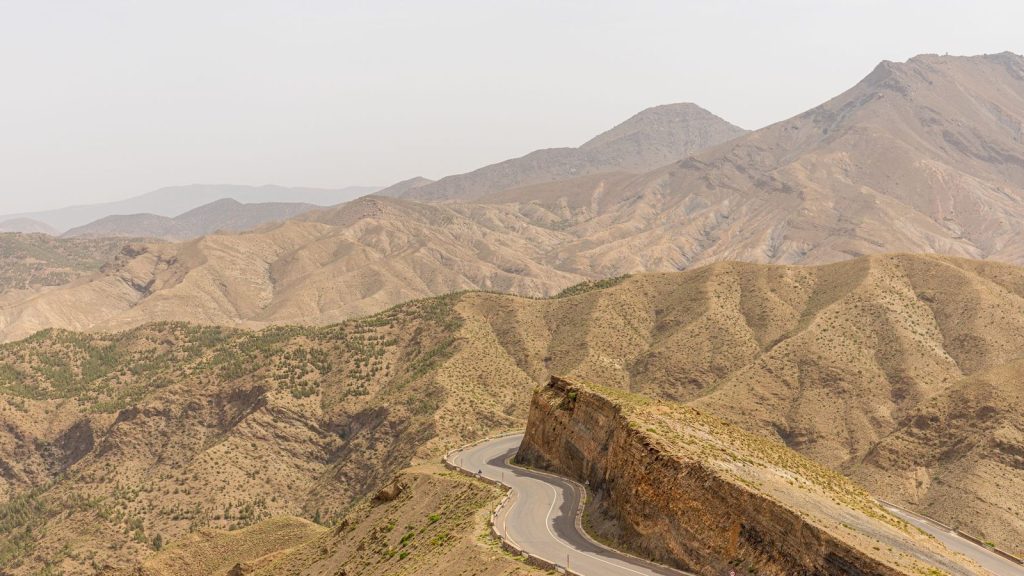
With the fall of the Marinids, power became centralised around Arabic-speaking dynasties (Saadians, Alaouites). Berber societies, especially in the mountains (Rif, Atlas, Souss), preserved a large degree of autonomy, their languages and their customs (‘Orf), but were often marginalised by the central authority.
- Resistance to colonisation: In the 20th century, Berber regions were the scene of fierce resistance against the French and Spanish protectorates. The Battle of Annual (1921) led by Abdelkrim al-Khattabi in the Rif is its emblem.
- Arabisation policy: After independence (1956), the Moroccan state favoured an Arab-Muslim national identity, marginalising the Amazigh language and culture in public life and education.
The Recognition and Amazigh Renaissance (Late 20th – 21st Century)
The last few decades have witnessed a historic reversal, the fruit of tenacious associative and intellectual struggle.
Cultural movement :
Since the 1990s, associations have campaigned for the recognition of Amazigh identity. The creation of the Royal Institute of Amazigh Culture (IRCAM) in 2001 was a major first step.
2011 Constitution :
A historic turning point. Amazigh is recognised as an official language alongside Arabic. The State is committed to promoting and protecting it.
Official integration :
Today, Amazigh is taught in some schools, and used in the administration and public media (such as the Tamazight TV channel). Tifinagh, the historical alphabet, is standardised.
Cultural tourism :
The richness of the Berber heritage (kasbahs, music, crafts, festivals such as the Moussem des Fiançailles in Imilchil) is a major asset for Moroccan tourism. For travellers wishing to explore these remote regions while staying connected, the Pocket Wi-Fi rental in Morocco is the ideal solution.
The Berber Cultural Heritage: A Pillar of Moroccan Identity
Amazigh culture profoundly permeates Moroccan society, far beyond the traditionally Berber-speaking regions.
Languages and Expression
Three main variants are spoken in Morocco: tachelhit (Souss), tamazight (Central Atlas) and tarifit (Rif). This linguistic diversity is a national treasure. The oral tradition (tales, poetry) and music (with instruments such as the loutar or the qarqaba) remain very much alive.
Arts, Crafts and Way of Life
Architecture :
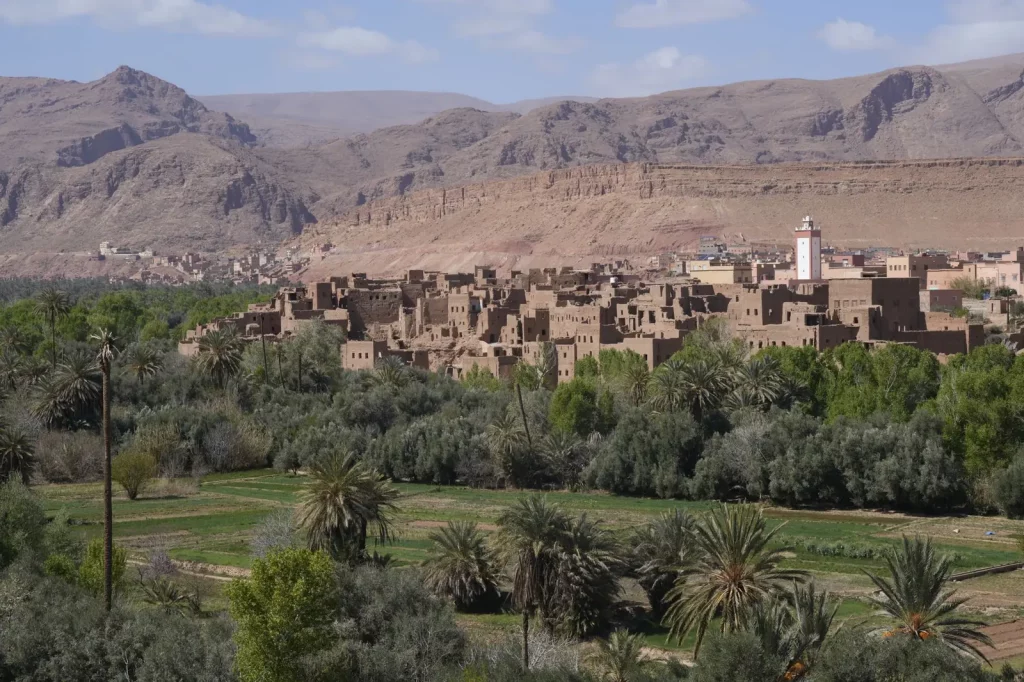
Earthen kasbahs, communal granaries (ighrem) and fortified villages (ksour) are masterpieces of adaptation to the arid environment.
Crafts :
Carpets with symbolic geometric patterns, pottery, silver jewellery (fibulae), leather and woodwork.
Society and traditions :
Strong tribal and family social structure, the importance of the village assembly (jema’a), and the celebration of the agricultural new year (Yennayer).
Conclusion: The Berbers, the Future of a Millennial Memory
The history of the Berbers in Morocco is that of a resilient people, a major actor in their own destiny. From the ancient kingdoms to the medieval empires, from colonial resistance to contemporary constitutional recognition, the Imazighen have constantly negotiated their place, preserving a cultural heritage of inestimable richness. Today, the Amazigh language and culture are no longer perceived as marginal folklore, but as a fundamental pillar of the plural and open Moroccan national identity. Their vitality, between tradition and modernity, continues to enrich the face of Morocco.
Call-to-Action: History is under your feet! To deepen your discovery, visit the archaeological museums of Rabat or Tétouan, explore the preserved valleys of the Atlas, and talk with the locals to grasp the vibrancy of this culture. And to share your discoveries in real time from the Berber trails, remember that a Pocket Wi-Fi Maroc offers you a reliable connection throughout the kingdom. Dive into this historical and human adventure, essential for understanding the soul of Morocco.
One router for the whole group
€4.90 a day · data that does not run out · up to 10 devices at once · free delivery and collection in Marrakech, airport included
Check dates and book
Questions before you book? WhatsApp +212 6 23 11 25 18 or email contact@pocketwifimorocco.com.