One pocket Wi-Fi for the whole trip: €4.90 a day.
Up to 10 devices on 4G data with no daily cap, wherever Maroc Telecom has coverage. Free delivery and collection in Marrakech, airport included.
Book my pocket Wi-Fi See pricingIn this article
- Legal Requirements for Driving in Morocco
- The Moroccan Highway Code: Particularities to Know
- Practical Tips for Driving in Morocco
- Road Safety and Emergency Situations
- Car Rental in Morocco
- Roads and Routes in Morocco
- Specific Tips by Region
- Technology and Driving in Morocco
- Conclusion: Enjoy the Road in Complete Safety
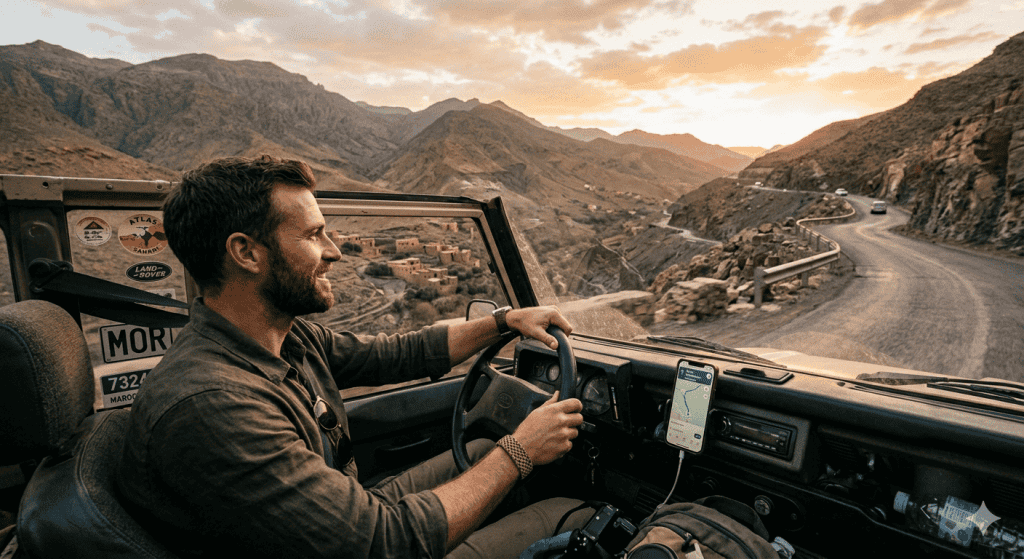
Driving in Morocco offers incomparable freedom to discover the breathtaking landscapes of this North African country, from the Atlas Mountains to the Sahara dunes, not to mention the Atlantic coasts. However, driving in this country requires careful preparation and a good understanding of local particularities. Whether you are planning a road trip along the imperial cities or need to travel for business, this guide will provide you with all the essential information for driving in Morocco safely and in accordance with the regulations.
Legal Requirements for Driving in Morocco
Driving Licence and Required Documents
Before getting behind the wheel in Morocco, make sure you have the appropriate documents:
International Driving Permit :
Although a French licence is generally accepted, it is highly recommended to obtain an international permit to avoid any problems with local authorities.
Valid Passport :
Your passport must be valid for at least 6 months after your date of entry into Morocco.
Green Card Insurance :
Check that your car insurance covers Morocco or take out an international extension.
Vehicle Registration Document :
If you are using your own vehicle, the original registration document is mandatory.
For the most recent official information regarding required documents, consult the website of the Moroccan Government Portal.
Minimum Age and Restrictions
The minimum age for driving in Morocco is 18 for passenger cars. Drivers under 21 may encounter additional restrictions with rental companies. For rental vehicles, most agencies require the driver to be at least 21 years old and to have held their licence for at least one year.
The Moroccan Highway Code: Particularities to Know
Essential Traffic Rules
The Moroccan highway code is largely inspired by the French system but has certain specificities:
- Drive on the right: As in France, you drive on the right in Morocco.
- Speed limits:
- Built-up areas: 40-60 km/h
- National roads: 100 km/h
- Motorways: 120 km/h (some sections limited to 100 km/h)
- Seat belts: Mandatory for all vehicle occupants.
- Phone while driving: Using a mobile phone without a hands-free kit is strictly prohibited.
- Blood alcohol limit: Limited to 0.2 g/l of blood (stricter than in France).
Road Signage
Signage in Morocco mainly uses pictograms similar to those of the Vienna Convention, with inscriptions in Arabic and sometimes French. Direction signs in major cities are often bilingual. It is important to note that in some rural areas, signage may be less present or less well maintained.
Practical Tips for Driving in Morocco
Vehicle Preparation
Whether you are using your own vehicle or a rental car, certain precautions are essential:
Complete mechanical check :
Tyres (pressure and wear), brakes, fluid levels, lighting.
Mandatory equipment :
Warning triangle, hi-visibility vest, spare wheel in good condition.
Adapting to climatic conditions :
Plan for snow chains in winter if you cross the Atlas, and check the air conditioning system for desert regions.
Survival kit :
Drinking water, non-perishable food, first aid kit, survival blanket.
Behaviour on the Road
Driving in Morocco can surprise Europeans with its sometimes unpredictable nature:
- Anticipate unpredictable behaviour: Pedestrians crossing outside designated areas, animals on the road, vehicles stopping suddenly.
- Be patient in cities: Urban traffic can be dense and chaotic, particularly in Casablanca, Rabat and Marrakech.
- Use your horn in moderation: Although more common than in Europe, excessive horn use is considered rude.
- Watch out for two-wheelers: Scooters and motorbikes often filter between lanes and can appear suddenly.
Road Safety and Emergency Situations
Dealing with Police Checks
Police checks are frequent on Moroccan roads. If stopped:
- Stay calm and polite
- Present your documents (licence, passport, registration, insurance)
- Never offer money to “settle” an offence
- If you receive a fine, demand an official receipt
To know your rights and obligations during a roadside check, refer to the information from the General Secretariat of the Government.
In the Event of an Accident
If you are involved in an accident:
- Secure the scene (hi-visibility vest, warning triangle)
- Call the emergency services: police (19), fire brigade (15), ambulance (15)
- Do not move the injured unless there is immediate danger
- Take photos of the accident and the vehicles involved
- Fill in an accident report form if possible
- Contact your insurance company and the embassy if necessary
Car Rental in Morocco
Choosing the Right Agency and Vehicle
Car rental is a popular option for tourists. Here are our recommendations:
International vs local agencies :
International agencies offer more guarantees but are more expensive. Local agencies may offer better prices but check the terms carefully.
Type of vehicle :
For mountain roads or desert tracks, opt for a 4×4. For urban journeys and main roads, a compact car is sufficient.
Insurance :
Always take out full insurance with zero excess. Check what is covered (windows, tyres, underbody).
Pre-departure inspection :
Thoroughly examine the vehicle and note all defects on the contract.
Costs and Fuel
Rental prices vary according to season, vehicle type and duration. Fuel is generally cheaper than in Europe, but petrol stations can be far apart in desert areas. Always fill up when you get the chance.
Roads and Routes in Morocco
Road Network: Condition and Particularities
Morocco has a constantly improving road network:
Motorways :
Frequent tolls but roads in excellent condition linking the main cities
National roads :
Generally in good condition but with winding stretches in the mountains
Secondary roads :
Variable quality, which can be badly damaged in rural areas
Tracks :
Reserved for experienced 4×4 drivers, particularly in the Sahara
To plan your routes with the most up-to-date information on road conditions, consult the website of the Moroccan Roads Directorate.
Recommended Scenic Routes
- The Route of a Thousand Kasbahs: From Ouarzazate to Tinghir
- The Atlantic coast: From Essaouira to Agadir
- The Atlas crossing: From Marrakech to Ouarzazate via the Tizi n’Tichka pass
- The Imperial Route: From Fès to Rabat via Meknès
Specific Tips by Region
Driving in the City
In Morocco’s major cities, traffic can be intense. Paid parking is frequent, one-way streets are numerous, and traffic is dense during rush hour. Use guarded car parks when possible and avoid the city centre at peak times.
Driving in the Mountains
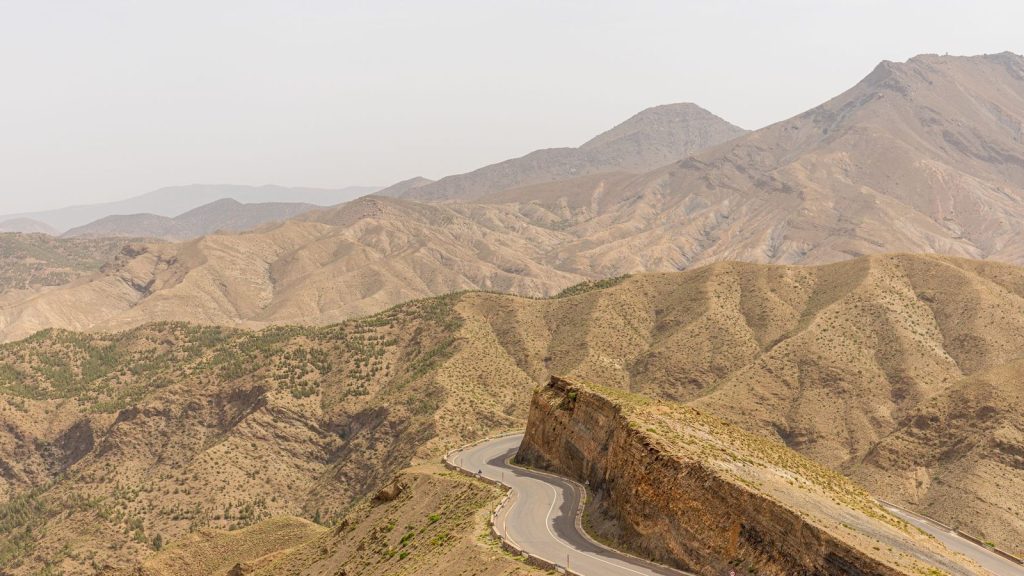
Mountain roads, particularly in the Atlas, feature sharp bends, significant gradients and few guardrails. Drive carefully, use engine braking, and be alert to possible rockfalls after rain.
Driving in the Desert
For adventurers wishing to venture into the Sahara:
- Only in a 4×4 with suitable tyres
- Never alone – always at least two vehicles
- GPS navigation equipment and compass
- Large reserves of water and fuel
- Inform someone of your route and estimated time of arrival
Technology and Driving in Morocco
Useful Apps
Several apps can make your driving in Morocco easier:
Waze and Google Maps :
For navigation, although coverage may be limited in remote areas
Weather apps :
Essential for anticipating changing climatic conditions
Translator :
To understand signs in Arabic
Staying Connected on the Road
A reliable internet connection is crucial for navigation and safety. Rather than relying on mobile coverage that can be erratic outside cities, opt for a dedicated connection solution. Pocket Wi-Fi rental in Morocco offers a stable high-speed connection throughout the country, essential for your navigation apps and emergency communications. A Morocco Pocket Wi-Fi allows you to stay connected even in the most remote areas, enhancing your driving experience with safety and peace of mind.
Conclusion: Enjoy the Road in Complete Safety
Driving in Morocco is a rewarding experience that allows you to discover the country at your own pace, off the beaten track of traditional tourist circuits. By respecting local rules, preparing your trip meticulously and adopting driving suited to the conditions, you can fully enjoy the diversity of Moroccan landscapes in complete safety.
Remember that caution and patience are your best allies on Moroccan roads. Take the time to stop and admire the scenery, interact with local people, and savour every moment of your driving adventure.
Call-to-Action
Ready to hit the road in Morocco? Start by checking the validity of your documents, choose the vehicle suited to your route, and don’t forget to take out comprehensive insurance. To stay connected throughout your journey, remember to book your internet connection with a Morocco Pocket Wi-Fi service, which will guarantee you smooth navigation and secure communications. Have a great trip and safe driving!
Share your driving experiences in Morocco in the comments below and ask your questions if you are planning your first road trip in this magnificent country.
One router for the whole group
€4.90 a day · data that does not run out · up to 10 devices at once · free delivery and collection in Marrakech, airport included
Check dates and book
Questions before you book? WhatsApp +212 6 23 11 25 18 or email contact@pocketwifimorocco.com.