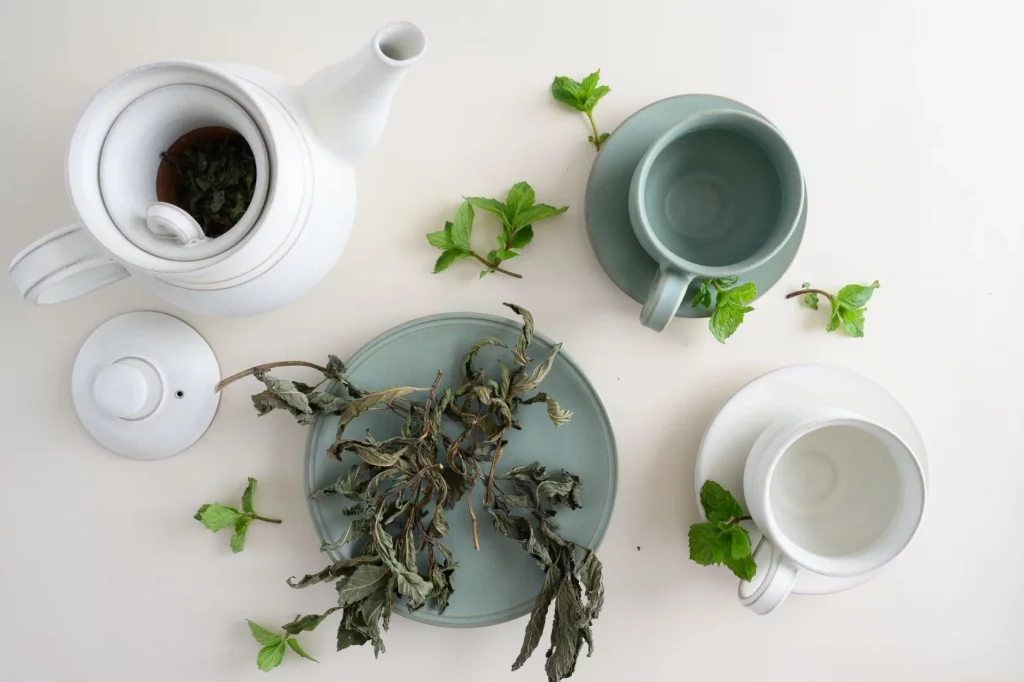
Moroccan Mint Tea Ceremony: An Ancestral Art of Living
At the heart of Moroccan culture beats the slow, flavoursome rhythm of a centuries-old ritual: the mint tea ceremony, so much more than a simple drink. A symbol of hospitality, sharing and conviviality, this green tea scented with fresh mint and generously sweetened embodies the very soul of Morocco. From the meticulous preparation to the three-service tasting, every gesture is codified, laden with meaning and tradition. In this article, we invite you to delve into these fascinating customs, discover the secrets of its perfect preparation and understand why this tea is far more than a drink—it is a true art of living.
Origins and Cultural Significance
Mint tea, known as “atay” in Moroccan Arabic, was introduced to Morocco in the mid-nineteenth century through trade with Europe. Quickly adopted and adapted, it became a cornerstone of social life. Its ceremony, inherited from Berber and Arab traditions, transcends the simple steps of preparation to become a sacred moment of connection.
- A symbol of hospitality: Offering tea is a sacred duty. Refusing the first invitation is polite, but declining the third can be seen as an offence.
- A social ritual: It seals alliances, soothes conflicts and accompanies every event, from business negotiations to family celebrations.
- Generational transmission: The secrets of preparation are passed down orally, often from mother to daughter or father to son, perpetuating an intangible heritage.
To learn more about the history of cultural exchanges in Morocco, consult the resources of UNESCO, which documents this heritage.
Preparation: A Meticulous Ceremony
Preparing Moroccan mint tea is an art that demands patience, skill and respect for traditional steps. Here is the detailed process, from selecting ingredients to the first infusion.
The Essential Ingredients
The quality of the tea rests on three pillars:
- Green tea: Usually Gunpowder, chosen for its rolled leaves which release their aroma gradually.
- Fresh mint: Locally grown nanah mint, with its intense, slightly peppery fragrance.
- Sugar: Sugar in lumps or in a cone, added generously—often 5 to 6 lumps per teapot.
Steps of Traditional Preparation
The ancestral method follows a precise sequence:
- Rinsing the teapot: Pour boiling water into the metal teapot (often silver or steel) to heat it and remove impurities.
- Infusing the tea: Add the green tea and a little boiling water. Leave to infuse for a minute, then discard this first water to soften the bitterness.
- Adding the mint and sugar: Add the fresh mint sprigs and sugar. Top up with boiling water.
- Aerial mixing: Pour the tea into a glass, then pour it back into the teapot several times. This gesture, called “ragwa”, oxygenates the tea and balances the flavours.
To explore Moroccan culinary techniques further, the official Moroccan government portal offers resources on gastronomic traditions.
Serving and Tasting: An Elegant Ballet
Serving the tea is a graceful performance, where height and precision play a key role. The tea is traditionally poured from a height—sometimes over 50 cm—to create a light foam, a sign of quality and mastery.
The Three Symbolic Services
The tea is served in three successive glasses, each with its own meaning:
- The first glass: “Sweet as life”, it is the sweetest, symbolising gentleness and welcome.
- The second glass: “Strong as love”, slightly less sweet, it represents passion and the strength of bonds.
- The third glass: “Bitter as death”, the least sweet, a reminder of the bitterness of mortality and the importance of savouring the moment.
Rules of Etiquette
When tasting, observe these customs:
- Hold the glass by the rim, never by the base, to avoid burning your fingers and show respect for your host.
- Slurping loudly is acceptable—it is even a sign of appreciation.
- Never refuse the third glass, unless absolutely necessary, at the risk of breaking the magic of the moment.
Tea in Everyday Life and Celebrations
Mint tea sets the rhythm of Moroccans’ daily lives, from informal breaks to major events.
In Daily Life
It accompanies breakfasts, afternoon breaks and conversations among friends. In the souks, it is offered to potential customers to create a climate of trust before negotiations.
During Celebrations
At weddings, religious festivals such as Eid, or family gatherings, the tea is served in ornate glasses and decorated teapots, often accompanied by pastries such as gazelle horns or ghoriba.
Tips for an Authentic Experience
To fully experience this ceremony, whether you are in Morocco or at home, follow these recommendations:
- Invest in a traditional teapot: In metal, with a long spout, it is essential for the aerial mixing.
- Choose quality ingredients: Opt for organic Gunpowder and fresh mint, preferably nanah.
- Take your time: The ceremony often lasts from 30 minutes to an hour. It is a moment of relaxation to be savoured unhurriedly.
- Share it: Moroccan tea loses its essence if drunk alone. Invite loved ones to recreate the spirit of conviviality.
If you are travelling to Morocco to discover these traditions, stay connected easily with a Pocket Wi-Fi Rental in Morocco. A Pocket Wi-Fi Morocco lets you share your experiences in real time and browse to find the best tea salons.
Conclusion: Much More than a Drink
The Moroccan mint tea ceremony is a living heritage, where every gesture tells a story of hospitality, sharing and respect. By mastering its rituals, you are not merely preparing a drink—you are perpetuating a philosophy of life that places humanity at its centre. Whether you are a curious traveller or an enthusiast of traditions, let yourself be won over by this moment of grace, where time seems suspended around a steaming teapot.
Ready to experience it? Start by getting the essential ingredients and invite friends for an authentic tasting. And if you are planning a trip to Morocco, remember to research local customs through reliable sources such as the Encyclopædia Britannica to enrich your cultural understanding.